The Zhangjinggao Yangtze River Bridge spans Zhangjiagang City in Suzhou, Jingjiang City in Taizhou, and Rugao City in Nantong, and is expected to be completed and opened to traffic in 2028. The river-crossing section of the bridge is about 7,900 meters long, of which the south navigational channel bridge has a span of 2,300 meters, making it the world's longest-span suspension bridge and China's first bridge to break the 2,000-meter span threshold. The bridge sets 6 "world records" and features 6 "world-first" designs. Once completed, it will promote exchanges among the northern, central, and southern regions of Jiangsu Province and become an important channel in Nantong's "Eight Dragons Crossing the River" layout, driving integrated regional economic development. China's New Landmarks follows the reporter to visit this super bridge that "connects three cities with one bridge."

Now, when riding the Zhanggao car ferry on the lower reaches of the Yangtze River, many people's eyes are drawn to a "gate"-shaped and an "H"-shaped building structure. These are the only water-based main tower and its auxiliary tower of the Zhangjinggao Yangtze River Bridge, which are rising higher and outlining the silhouette of the world's longest-span suspension bridge. Once completed, the Zhangjinggao Yangtze River Bridge will connect three important cities in central and southern Jiangsu Province and, serving as a fulcrum, play a role in deepening regional cooperation and cross-river integration. At the same time, the Zhangjinggao Bridge also marks the first time that a Chinese bridge's span has broken the 2,000-meter threshold. However, the larger the bridge span, the more materials are consumed, the taller the main tower, and the larger the anchorage foundation, all of which bring unprecedented challenges to the construction process. When we arrived at the construction site, we happened to catch the hoisting of the main tower's ultra-large steel crossbeam.

What is being hoisted behind the reporter is the heaviest steel segment of the entire bridge's main tower crossbeam. This steel segment, weighing 400 tons and equivalent to the height of a 5-story building, is being lifted little by little from the transport ship to the lower crossbeam of the main tower, about 60 meters above the river surface. This is equivalent to hoisting 200 cars at once to the height of a 20-story building.
In the view of Huang Xiuping, deputy chief engineer of the project, the hoisting of the crossbeams at various parts of the bridge is like "building with blocks" in the air piece by piece. The tower columns of the main tower are likewise formed by stacking 30 segments layer upon layer in a "building blocks" manner. So, how does the cable tower assembled from these "blocks" differ from a conventional concrete tower? We climbed onto the lower crossbeam connecting the two tower columns to take a closer look.
Huang Xiuping, deputy chief engineer of the Technology Center of CCCC Second Harbor Engineering Co., Ltd., introduced: "Its outer shell is a steel structure, and inside there are 4 columns with a diameter of 3.6 meters, filled with concrete. Compared with a traditional concrete tower, this can reduce the tower's own weight by 50%."
This "composite cable tower" is a "world-first" design specially tailored by the project team for the Zhangjinggao Bridge. First, reducing the cable tower's own weight can increase the stability of the bridge's overall structure; second, the "building blocks" method is more conducive to the rapid construction of super-high cable towers. The height of the cable tower actually depends on the bridge span.
Huang Xiuping introduced: "The annual swing amplitude of the deepwater channel is about 1,890 meters. During the bridge construction process and later during the bridge's operation, in order to ensure smooth navigation, the main span of the Zhangjinggao Bridge was chosen to be 2,300 meters."
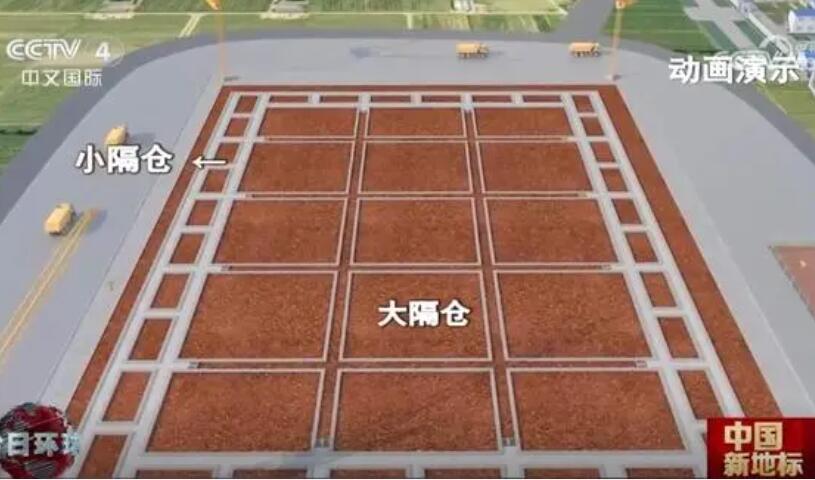
Huang Xiuping said that once a bridge span exceeds 2,000 meters, its design and construction are essentially entering "uncharted territory," and many technologies can only be developed by trial and error. At the same time, this has forced the team to innovate multiple "firsts" and "number ones." For example, an anchorage foundation large enough is needed to secure the entire weight of the bridge like a "counterweight." To this end, the builders dug a giant underground "castle" on the riverbank equivalent in size to 20 basketball courts.
The reporter went underground and found that the interior of the entire bridge anchorage foundation is composed of compartments one by one. The one where the reporter was located is a small compartment about 9 meters long and more than 4 meters wide. Because it is more than ten stories below ground, the air is very stuffy and humid. The temperature here has exceeded 37°C, and the humidity has also exceeded 60%.
Working in such a narrow underground space is like working in a deep well. The workers have to overcome the heat of hydration generated by the underground concrete. Around the entire perimeter of the anchorage foundation, 32 small compartments were built and then connected with the 15 large compartments in the middle to form a pioneering "composite" anchorage structure, which is also the world's largest underground diaphragm wall anchorage foundation.
Zhou Yanping, deputy manager of the A1 bid section project of the Zhangjinggao Yangtze River Bridge of CCCC Second Harbor Engineering Co., Ltd., introduced: "We pioneered a technique in which an 83-meter steel box is first sunk underground, and then, hand in hand beside it, a second-phase reinforcement cage and reinforced concrete structure are constructed, thus forming a temporary underground diaphragm wall. Then, through rebar tying and concrete pouring in the small and large compartments, a powerful anchorage foundation for the entire bridge is formed."
From the anchorage to the cable tower, the construction progress of the Zhangjinggao Bridge is accelerating. Next, from the installation of the world's longest high-strength main cable to the erection of the longest continuous steel box girder on the bridge deck, the construction team will still face a series of tests. However, although it will be another 4 years before completion, the spillover effect of the Zhangjinggao Bridge on regional development has already begun to appear.
Pan Dingrui, head of the Rugao operations of an Indonesian timber company, said: "With more river-crossing channels, the Sutong Bridge and the Zhangjinggao Bridge, we are even more confident, and we will increase investment here."
Just as this Indonesian overseas Chinese investor in Rugao, Nantong, said, in the future the construction of the Zhangjinggao Bridge will help cities such as Nantong and Taizhou connect with Shanghai at a deeper level and better integrate into the development of southern Jiangsu, improve coordination and linkage between the Suzhou-Wuxi-Changzhou metropolitan area and the coastal development belt, and strengthen the driving role of the core area of the Yangtze River Delta in the development of surrounding regions.
Du Xiaofeng, deputy mayor of Rugao Municipal People's Government, said: "With the further improvement of transportation convenience and accessibility, Rugao's attractiveness for investment from southern Jiangsu and Shanghai will certainly be further strengthened, and Rugao will surely welcome more development resources and opportunities."
In 2020, the National Development and Reform Commission issued the Layout Plan for River-Crossing Channels on the Yangtze River Main Line, in which Nantong has 8 river-crossing channels listed, forming the "Eight Dragons Crossing the River" layout. The Zhangjinggao Bridge is one of these "dragons." At present, along Nantong's 166-kilometer Yangtze River shoreline, 6 river-crossing channels have been completed and opened to traffic or have started construction, and another two are about to start construction or are in the stage of deepened preliminary research. Through "Eight Dragons Crossing the River," Nantong, which "relies on the river, the sea, and Shanghai," will completely break the dilemma of "Nantong in the south is not connected to the south" that was once constrained by the natural barrier of the Yangtze River, and usher in new development opportunities. Looking at the entire Yangtze River Delta region, "making up for shortcomings in river-crossing channels" will effectively meet growing demand for river crossings and enhance rapid river-crossing capacity, thereby strengthening regional complementary advantages, cross-river integration, and north-south linkage. In the future, with the completion of a large number of river-crossing channels such as the Zhangjinggao Yangtze River Bridge, exchanges among different regions of the Yangtze River Delta will become closer, and more new vitality will be injected into the coordinated development of the Yangtze River city cluster.
Jinan Yellow River Bridge Parallel Bridge to Achieve Main Line Opening Within the Year
下一篇First Concrete Successfully Poured for Abutment 13 of the Mtentu Bridge in South Africa, Built by a Chinese Enterprise

2026-10-14 1 0
2026-09-28 40 0
2026-09-22 10756 0

2026-09-18 11027 0



评论 (0)